Uptime and Performance Monitoring for DevOps
Monitor external endpoints every minute, track retained p95 response time, compare releases, and route confirmed problems through named escalation policies.
Your first endpoint is free. A credit card is required to prevent abuse. Use parent sites and Groups to organize by service, environment, and/or client.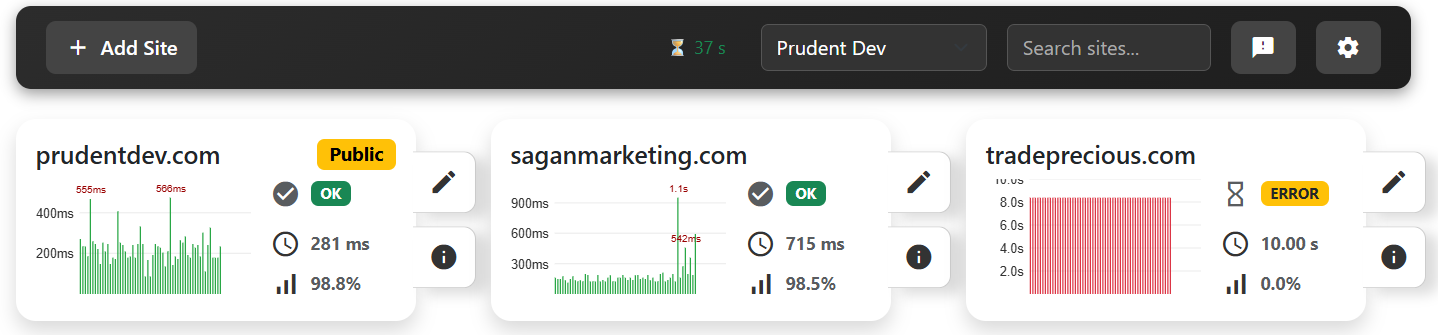
Built for day-to-day operations
Clear status, fast alerts, and data you can integrate into your existing stack.
P95 and Release Impact
Retain p95 latency and compare up to 30 successful checks before and after a deployment.
Simple JSON API
Pull uptime, response time, and SSL status into automations.
Timed Escalation
Route ordered downtime steps to reusable Email, Slack, Discord, Teams, or webhook destinations.
What you get
Focused monitoring for HTTP/HTTPS, response performance visibility, and SSL certificate health.
Clean JSON for automation
Use the API for dashboards, scheduled checks, CI guards, and internal tooling. Keep the dashboard for humans, keep the data for systems.
Related reading: Monitoring automation: why signal quality matters.
{
  "url": "https://example.com",
  "isUp": true,
  "statusCode": 200,
  "lastResponseTimeMs": 243,
  "sslDaysRemaining": 41,
  "lastCheckedUtc": "2025-12-27T02:15:00Z"
}
Designed to be trusted
Ideal for
SaaS products, internal services, APIs behind Cloudflare, CI pipelines, and production systems.
FAQ
How is SiteInformant different from traditional uptime monitoring tools?
SiteInformant focuses on signal over noise. Clear uptime status, honest response time data, and SSL expiration tracking, with Groups that match how teams actually organize systems.
Is SiteInformant suitable for APIs and services?
Yes. SiteInformant provides a clean JSON API so you can pull monitoring data into dashboards, workflows, internal tooling, and reporting systems that need reliable health signals.
Does SiteInformant require a credit card?
Yes, even for the free endpoint. This prevents abuse and helps keep checks reliable for everyone.
Can I organize endpoints by site, client, service, or environment?
Yes. Parent sites contain endpoints, and Groups organize parent sites by client, service, environment, or team.
Start monitoring in minutes
Add an endpoint, use the ready-made default escalation policy, and get reliable uptime and SSL visibility right away.
Try it free